Create short links and QR codes. Share them with colleagues, members, customers, and partners.
Create short, readable links with custom slugs. Perfect for posters, emails, and social media.
Every link automatically gets a QR code. Download and use in printed materials.
See how many people click and where they come from. Daily stats and top referrers.
A QR code (Quick Response code) is a two-dimensional barcode that can be scanned instantly with any smartphone camera. No app needed. Just point your camera and tap.
QR codes were invented in 1994 by engineer Masahiro Hara at Denso Wave, a Toyota subsidiary. The original purpose was to track auto parts on the factory floor faster than traditional barcodes. While a standard barcode stores about 20 characters, a QR code can encode up to 4,296 alphanumeric characters. That's enough for a full URL, a contact card, Wi-Fi credentials, or a message.
The technology is an open standard (ISO/IEC 18004). Denso Wave holds the patent but chose not to enforce it, making QR codes free to create and use worldwide. That decision is why they're everywhere today.
QR codes feature built-in error correction at four levels: even if up to 30% of the code is damaged, scratched, or partially covered, it can still be scanned. This makes them reliable on printed materials, product packaging, outdoor signage, and even T-shirts.
Today, over 100 million Americans scan QR codes regularly (Statista, 2025), and QR code creation grew 240% between 2021 and 2023. They're now the standard way to connect a printed page to a website.
QR codes connect printed materials to digital content. Click any category for real examples and statistics.
QR code menus took off during COVID-19 and stayed. Customers scan a code at the table, see the menu, order, and pay. No physical menu needed, no waiting for a server.
McDonald's Rolled out QR code ordering across thousands of locations worldwide. Customers scan table-side codes to access the menu and order without downloading an app.
Starbucks Uses QR codes in its app for mobile payments. Over 31 million active US mobile app users pay via QR scan at the register.
Square Reported a 25x increase in QR-code-based ordering between 2020 and 2021 among their restaurant clients.
Sweetgreen Early adopter of QR-based contactless ordering and payment, integrated into their in-store experience.
How to use it: Create a short link like qr4everyone.com/menu, print the QR code on table tents or stickers, and link it to your online menu. Change the destination anytime.
Brands put QR codes on product packaging so customers can find ingredient details, how-to videos, recycling instructions, and loyalty rewards.
Nike Uses QR codes on shoe boxes for product details, styling suggestions, and authentication verification to fight counterfeits.
Coca-Cola Places QR codes on cans and bottles linking to promotions, recycling information, and augmented reality experiences.
L'Oréal QR codes on cosmetics packaging link to virtual try-on tools and full ingredient transparency pages.
Hershey's Runs campaigns with QR codes on candy packaging linking to recipes, seasonal promotions, and interactive content.
How to use it: Create a link like qr4everyone.com/product-guide and print the QR code on your packaging. Link to video tutorials, warranty registration, or a feedback form.
QR codes have become the default format for event tickets. They're faster to scan than traditional barcodes and can include anti-fraud features.
Ticketmaster Transitioned to SafeTix, their rotating QR barcodes that refresh every few seconds to prevent screenshots and fraud. Deployed across 500+ million tickets annually.
Eventbrite Uses QR codes as the standard ticket format. Organizers scan attendee QR codes at entry with a smartphone.
Coachella Uses QR-enabled wristbands for entry, cashless payments, and social media sharing at the festival.
CES The Consumer Electronics Show uses QR-based badge scanning for booth lead capture and session check-ins, replacing traditional business card exchanges.
How to use it: Create unique short links for each event, session, or speaker. Print QR codes on badges, banners, and programs. Use click statistics to see which sessions generated the most interest.
QR codes save students from typing long URLs and connect physical textbooks and classrooms to digital resources.
Pearson & McGraw-Hill Major textbook publishers embed QR codes linking to supplementary video lectures, interactive exercises, and study guides.
Coursera / edX Issue digital certificates with QR codes that employers can scan to verify completion and authenticity.
Colorado State University Uses QR codes for campus wayfinding, library resource access, and lecture attendance tracking. Many other universities have followed.
Oxford Bodleian Library Uses QR codes to link physical exhibits to digital archives and supplementary research materials.
How to use it: Create links like qr4everyone.com/week5-video and print QR codes on handouts, textbooks, or classroom walls. Update the linked resource each week without changing the code.
QR codes make print advertising measurable. For the first time, you can track exactly how many people engaged with a poster, flyer, or billboard.
Coinbase Aired a 60-second Super Bowl commercial showing nothing but a bouncing QR code. It generated 20 million visits in one minute and crashed their servers. The app jumped to #1 on the App Store within hours.
Burger King Ran TV commercials with a floating QR code that gave viewers a free Whopper, driving a spike in app downloads.
Diesel Used QR codes on print ads linking to exclusive online content and limited-edition drops.
Bitly One of the most popular link management platforms, reports that QR code creation on their platform increased 750% from 2021 to 2022.
How to use it: Create one short link per campaign (qr4everyone.com/spring-sale, qr4everyone.com/flyer-a, qr4everyone.com/flyer-b) and compare click stats to see which performs best.
QR codes on "For Sale" signs let potential buyers instantly access the full property listing from the sidewalk. No need to remember a URL or search online.
Zillow Agents use QR codes on yard signs linking to the full listing page with photos, virtual tours, floor plans, and contact info.
Matterport Provides QR codes for agents to place on signage, linking directly to immersive 3D walkthroughs of properties.
Sotheby's International Realty Uses QR codes in luxury print advertisements and window displays linking to virtual property tours.
How to use it: Create qr4everyone.com/maple-street-5 and print a weatherproof QR code for the sign. When the property is sold, redirect the link to your other listings.
This is where QR codes began. Denso Wave created them in 1994 specifically to track automotive parts faster than traditional barcodes. The technology has since expanded to all areas of logistics.
Amazon Uses QR codes extensively in warehouse logistics for package tracking, bin location, and delivery verification across millions of daily shipments.
DHL Uses QR codes on parcels for tracking, sorting, and customer self-service pickup at parcel lockers worldwide.
Denso Wave The inventor still uses QR codes across Toyota's manufacturing lines. That's the original use case that started it all.
Walmart Uses QR codes in supply chain management for inventory tracking, shelf replenishment, and supplier coordination.
How to use it: Create short links for each piece of equipment, like qr4everyone.com/forklift-3, linking to the maintenance manual, inspection checklist, or reporting form. Update the content without replacing the physical label.
In hospitals, QR codes give staff fast access to patient data without manual entry. Fewer typos, faster workflows.
EU Digital COVID Certificate Used by all 27 EU member states. Over 1.8 billion certificates were issued with QR codes encoding vaccination status, test results, and recovery data.
Epic Systems The leading electronic health records provider uses QR codes for patient check-in via the MyChart app at hospitals and clinics across the US.
SMART Health Cards Used across the US and Canada, encoding vaccination data in scannable QR codes adopted by hundreds of healthcare organizations.
CVS Health & Walgreens Used QR codes for vaccine appointment scheduling, digital proof of vaccination, and prescription management.
How to use it: Create QR codes for patient information sheets, link medical equipment to digital manuals, or create wayfinding codes for hospital departments like qr4everyone.com/radiology.
QR code payments are the dominant mobile payment method in Asia and are growing rapidly in Europe. No special hardware needed. Just a printed code and a smartphone.
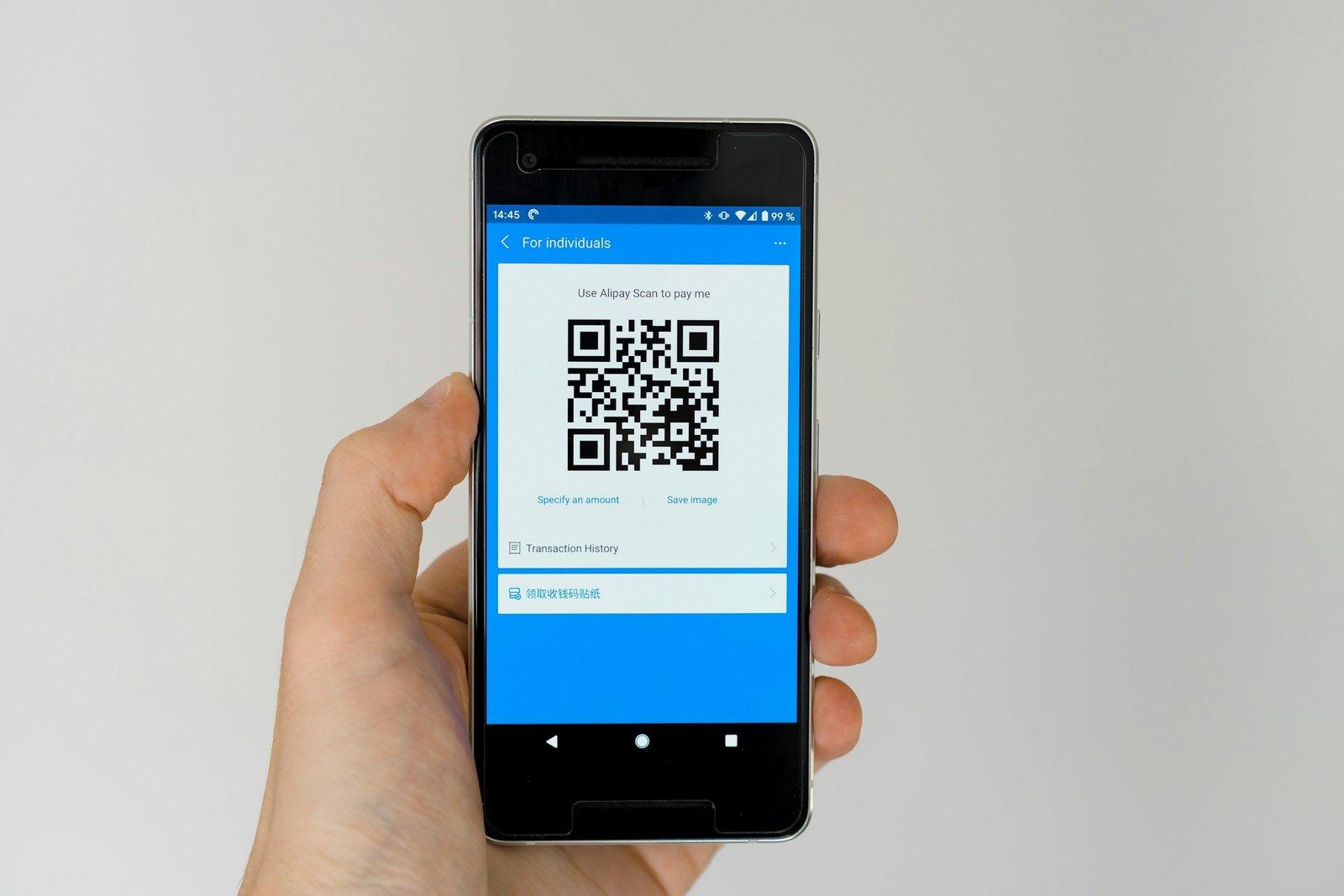
Alipay Over 1.3 billion users globally. QR code payments are everywhere in China, from street vendors to luxury stores. China's QR payment volume exceeded $17 trillion in 2023.
Vipps Norway's dominant mobile payment app with 4.4 million users (in a country of 5.5 million). Uses QR codes for in-store payments at shops and restaurants across Norway.
India UPI India's Unified Payments Interface processes over 10 billion QR transactions per month. Over 300 million merchant QR codes are deployed, making it the largest QR payment network in the world.
Pix (Brazil) Brazil's instant payment system uses QR codes as the primary merchant interface. Over 150 million users within 3 years of launch.
WeChat Pay Over 900 million monthly active payment users in China. Together with Alipay, they process the vast majority of mobile payments via QR codes.
M-Pesa Kenya's mobile money platform has added QR code payments, supplementing its original USSD-based system across East Africa.
How to use it: While QR Shortener is for URL links (not payment processing), you can create a QR code linking to your payment page, invoice, or donation link, like qr4everyone.com/pay.
Tourists use QR codes more than you'd think. Self-guided museum tours, digital boarding passes, city audio guides.
Louvre Museum Implemented QR codes for self-guided tours and ticketing at the world's most visited museum in Paris.
Visit Japan As the birthplace of QR codes, Japan uses them everywhere: train stations (JR East), temples, tourist boards, and the "Visit Japan Web" digital entry system for international visitors.
IATA The International Air Transport Association adopted QR-based boarding passes (BCBP) as the global standard. Over 3 billion boarding passes per year use QR codes.
Smithsonian Institution Uses QR codes next to exhibits linking to detailed digital content, audio guides, and related collections across 21 museums.
How to use it: Tourism boards can create QR codes for each landmark, like qr4everyone.com/old-bridge, linking to history, audio guides, and visitor tips in multiple languages.
QR codes make donating easy. Scan a code on a poster, flyer, or event banner and you're on the donation page in seconds.
Charity: Water Places QR codes on water well plaques linking to GPS coordinates and project updates, showing donors exactly where their money went. Real accountability.
UNICEF Uses QR codes on print materials and outdoor advertising worldwide to drive donations and information access about children's rights.
Red Cross Uses QR codes at disaster relief events and on printed materials for quick donation access during emergencies.
WWF Uses QR codes on print campaigns linking to donation pages, species information, and conservation project updates.
How to use it: Create qr4everyone.com/donate and print it on all materials. Track how many people scan from each location to optimize your campaigns.
QR codes aren't just for businesses. People use them at home, at weddings, and on their own business cards.
HiHello & Popl Digital business card platforms that generate QR codes sharing your full contact info (vCard format). Print it on your card and people scan instead of typing. Popl has sold millions of NFC/QR-enabled products.
Wi-Fi sharing Both iOS (since iOS 11) and Android generate QR codes encoding your Wi-Fi network name and password using the format WIFI:T:WPA;S:NetworkName;P:Password;;. Guests scan instead of asking for the password.
The Knot & Zola Wedding platforms with built-in QR code integration. QR codes on invitations link to RSVP pages, event details, gift registries, Google Maps directions, and shared photo albums.
How to use it: Create qr4everyone.com/my-card linking to your LinkedIn or portfolio. Print the QR code on your business card, email signature, or conference badge. Try our LinkedIn QR code generator or vCard QR code generator to get started.
At least 2 x 2 cm for business cards. For signage, use the 10:1 rule: scanning distance divided by 10. A sign scanned from 3 meters needs a 30 cm code.
Dark modules on a light background. Never invert colors. Maintain at least 40% contrast ratio for reliable scanning.
Keep a quiet zone of at least 4 modules around the QR code. Without this border, many scanners will fail to detect the code.
Scan with multiple phones (iPhone and Android), in different lighting, at the intended distance. Test the actual printed version, not just the screen.
Shorter URLs create simpler QR patterns. A simple pattern scans faster and works at smaller sizes. This is exactly what QR Shortener does.
Use Medium (15%) for most cases. Use High (30%) if you place a logo in the center, but keep the logo under 15% of the code area.
QR Shortener is completely free to use. No premium tiers, no trial periods, no credit card required. Create as many short links and QR codes as you need.
We believe everyone should have access to short links and QR codes, whether you're a teacher printing worksheets, a nonprofit running a fundraiser, or a small business owner making your first flyer.
Sign up in 30 seconds, create a short link, and download your QR code. Free forever.
Create free accountHistory, technical structure, error correction, encoding modes, and how scanning works.
QR code typesStatic vs dynamic, URL, vCard, WiFi, SMS, calendar events, crypto, and more.
QR codes for businessHealthcare, retail, logistics, government, airlines, and marketing examples.
QR code design guideSize rules, color contrast, logo placement, print DPI, and accessibility.
QR code securityQuishing scams, FBI warnings, real incidents, and how to stay safe.
QR code vs barcodeTechnical comparison, data capacity, 1D vs 2D, and GS1 Sunrise 2027.
QR code statisticsMarket size, payment data, country adoption, COVID impact, and growth trends.
QR code trackingScan analytics, location, device, and time data for dynamic QR codes.
How to scan a QR code on iPhoneBuilt-in Camera app, Control Center, and third-party app options.
QR code for restaurantDigital menus, ordering, payments, and review links for hospitality.
Static vs dynamic QR codeKey differences, when to use each, and how to switch without reprinting.
Share your LinkedIn profile in one scan.
Instagram QR codePoint followers to your Instagram profile instantly.
Facebook QR codeLink to your Facebook Page, Group, or profile.
WiFi QR codeLet guests connect without typing the password.
vCard QR codeShare contact details - scan saves to phone contacts.
WhatsApp QR codeStart a WhatsApp chat - no number saving needed.
PayPal QR codeAccept in-person payments - no card reader needed.